Ultimate Guide to Contractor Management
Online Induction >> Ultimate guide to Contractor ManagementPublished 24/04/2026
 If your organisation engages contractors, subcontractors and suppliers, a contractor management process and contractor management system are critical requirements for engaging, managing and evaluating contractors.
A contractor management system will commonly consist of a prequalification process, contractor induction, contractor sign in system, documentation management and review, job task allocation and tracking through to contractor performance evaluation.
Each of these areas expand into deeper contractor management workflows and that's where having a solid contractor management system and process can help ensure a smooth and consistent approach as well as ensuring compliance and addressing risk and safety goals.
View Contractor Management Templates, Forms and Examples
Discover the OnlineInduction.com contractor management system:

Discover the OnlineInduction.com contractor management system:
The Common Components of a Contractor Management System
Contractor PrequalificationA contractor management system starts with the contractor selection and engagement workflow. Known as contractor prequalification, this involves inviting contractor companies and subcontractors into a risk, safety and insurance review.
This prequalification review involves having the contractor company representative go through an extensive review around their risks, safety processes and insurances. This involves a classification process based on trade type and job activities where the contractor will commonly classed as a low risk, medium, high or elevated risk contractor. Think of this stage as a due diligence on the contractor company around their risk and safety history and the procedures and systems they have in place. This helps determine if they really should be an approved and preferred contractor working with your organisation.
Risk and Safety Review
Some common topics you might include:
- Understanding employment practices: with questions examining areas around any enforcement action in respect of underpayments to employees in the last 5 years or has any pending or if they've had any Fair Work issues or even understanding their procedures around checking their staffs right to work in Australia.
- Get a copy of their Work Health and Safety Policy
- Capture a risk assessment from the contractor for their works / job task on site
- Understanding if the contractor undertakes worksite safety inspections and internal audits
- Will they be using any of their own plant and equipment on site
- Will they be using any chemicals and hazardous substances
- Declaration around any previous regulator issues
- Unpacking if the contractor is going to be doing any High Risk Work and/or High-Risk Construction Work (and then if so, capturing the relevant SWMS's)
Insurance Review
An extensive insurance review will be undertaken to ensure the contractor holds valid insurance for their job task or activity and critically that they hold the correct level of cover. Some contractors may be under insured for their activities. For example, a supplier offering legal advice holds $20 million public liability with an aggregate of $20 million but what if the impact of that advice results in damages higher than this threshold? Some organisations require professional indemnity insurance in the aggregate to be up to $60 million in cover depending on the risk level of the advice received and the nature of the engagement. What about cyber liability insurance? Have you ensured your cloud service providers hold cyber liability and to the correct level of cover? Cyber liability should not be confused with a general IT liability policy.
Common insurances collected:
- Public liability
- Product Liability
- Workers Comp
- Cyber Liability Insurance
- Professional Indemnity
- Vehicle Insurance
The next step in a Contractor Management System:
Ensure all contractors go through a Contractor Induction
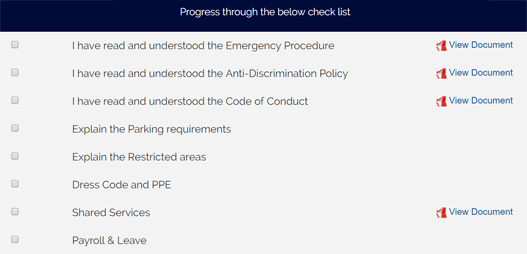
Prepare contractors before they arrive on site by having them go through a comprehensive contractor induction. Commonly this will cover important safety protocols, hazard awareness, procedures to follow, safety materials that are required from them, contractor obligations, risk awareness, site access procedures and important policies and compliance information in order to be certified as inducted and approved to work on site. Commonly organisations will ensure no contractors can work on site unless they have first completed the contractor induction and are fully compliant. Producing an up to date and live registry of inducted contractors might be one of the audit items as part of a safety audit.Common topics in a contractor induction might include:
- What is required prior to performing work on site
- Your Committed To Safety
- The Chain of Safety Responsibilities
- Site Housekeeping
- Conduct on site
- Preventing psychosocial harm
- Hazards on site to be aware of and procedures to follow
- How to report an incident, hazard or near miss
- Safety documentation required (i.e. method statements, JSA's etc)
- Approval to work on site process
- Emergency Management
- High risk tasks and permit to work
- Chemicals and dangerous goods
- Working at heights
- Electrical works
- Traffic control
This will form a founding part of your contractor management software
Try creating your own Contractor Induction here
Discover our templates or build your own induction using our platform
Discover our templates or build your own induction using our platform
Phase 3 of a Contractor Management System:
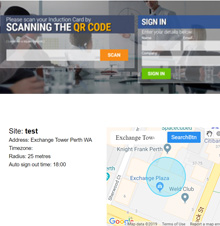
Contractor Sign in / Sign out on site
Once contractor companies are prequalified and their individual contractor staff inducted, they can now sign in and out on site. This is an important part of the contractor management system where you can ensure day to day that contractors remain compliant and also track their attendance in and out on site. By having a spot check on compliance matched to the sign in process, you can ensure that if a contractor becomes due for induction renewal or if their insurance has expired, these compliance gaps will be captured at the sign in process.- sign in / sign out tracking of contractors with live registry of who is on site
- compliance spot checks for things like induction status, insurance status or other compliance checks
You can even build in more complex workflows such as questions around the nature of work today and if it’s a high risk, task prompt for a permit to work. Another workflow might be around key access management.
Explore our Contractor Sign In System

Phase 4 of a Contractor Management System:
Ongoing Contractor Documentation Management
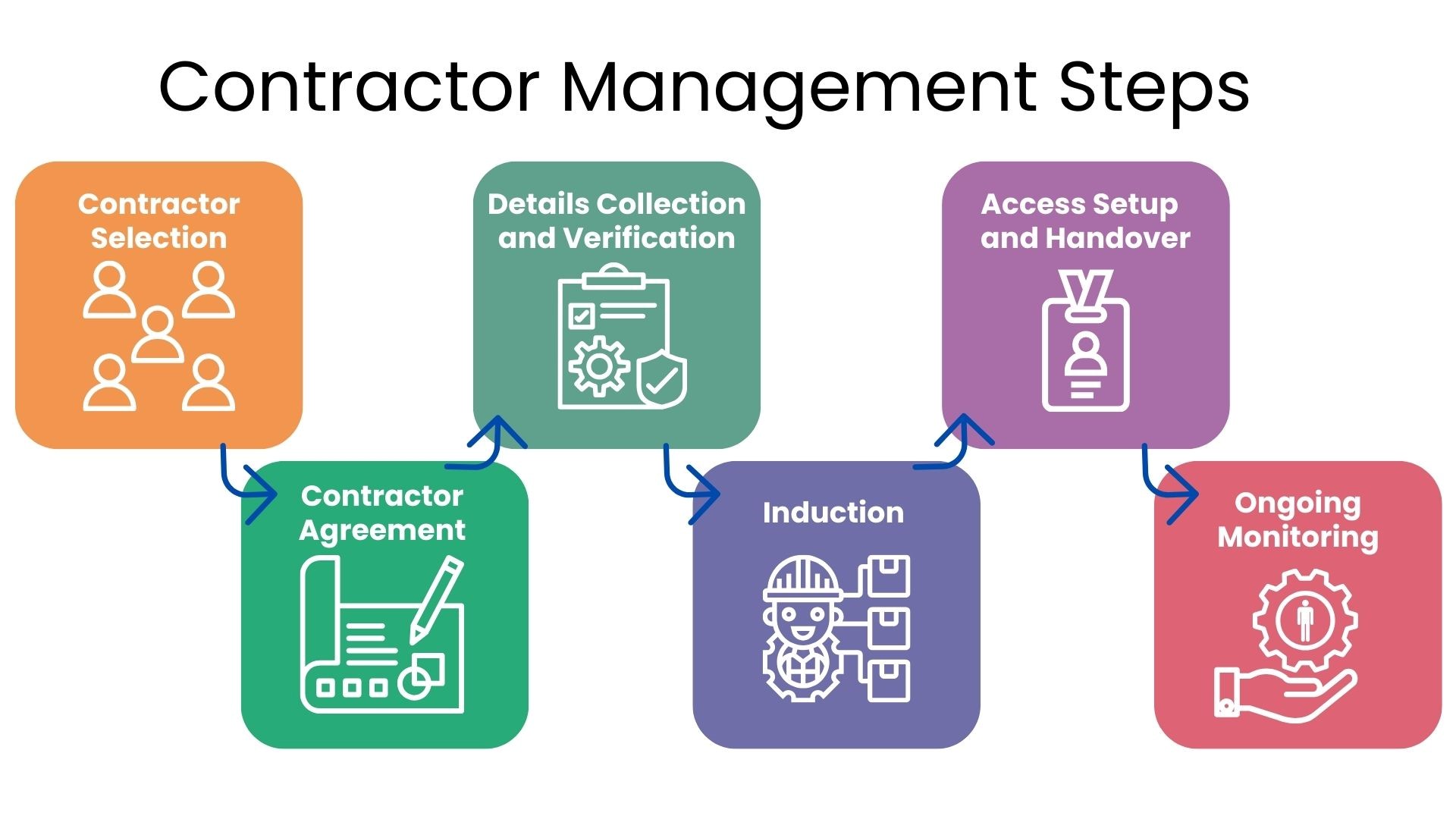
There is a significant amount of contractor documentation required both before they start work with an organisation and during their job tasks and activities on an ongoing basis. This might range from project or organisation specific documentation required to be engaged as a contractor such as specific insurances, evidence of training or certifications through to copies of policies, procedures and systems they have in place as part of an overall compliance review. For ongoing documentation this might include SWMS or JSA's that relate to specific trade and risk classifications.The common workflow across contractor management software
Think about checking and verification of contractor materials such as:
- Will the contractor required confined space entry? Then they will need to provide confined space SWMS procedures
- Hot Works? Hot Work SWMS Procedure
- Working on or near live electrical equipment? Electrical SWMS procedure required
- Will the contractor be bringing any of their own chemicals, hazardous materials or dangerous goods (things like fuels or equipment solvents, cleaning products etc)
- Any required Safety Data Sheets
In a Contractor Management System these areas require review and verification
Discover our Contractor Verification Checking
Ongoing Contractor Performance Evaluation and Review
Should the contractor remain a preferred and approved contractor? How many times have you reviewed your contractors in the last 12 months to evaluate based on the data points whethe they should remain an approved contractor?Commonly an organisation might conduct annual safety reviews of their contractors, examining questions such as:
- Were SWMS satisfactory for the work undertaken
- Were work permits managed to a satisfactory standard
- Was contractor housekeeping satisfactory
- Were all hazards and incidents reported
- Was the SWMS followed at all times
- Contractor environmental performance satisfactory
- Contractor documentation and record keeping satisfactory
- Provision of Service
- Was the work completed on time
- Defects
- Feedback from Site Employees or Customers
- Modern slavery review
- Should the contractor remain on the approved contractor list
Discover our Contractor Management System
Explore our Contractor Management Software