Online Induction >> Guide and tips for Residential Contractor Software
Published 19/12/2025
Residential Contractor Software

In today's fast-paced world, efficiency and precision are more critical than ever for residential contractors. Managing a construction project isn't just about laying bricks or hammering nails; it's a symphony of coordination, timelines, and budgets. Enter residential contractor software—an innovative solution transforming how contractors operate. This technology streamlines everything from project management to client communication, allowing builders to focus on what they do best: crafting beautiful homes. No longer are contractors bogged down by administrative headaches; instead, they have a digital assistant that keeps track of every detail so nothing slips through the cracks.
But why stop at mere convenience? Residential contractor software does more than simplify tasks; it enhances the entire construction process. Imagine having real-time data on supply chain logistics or instant access to blueprints and design modifications at your fingertips. These features empower contractors to make informed decisions swiftly, minimizing costly delays and overruns. Moreover, with robust analytics baked into these platforms, identifying trends or potential issues becomes second nature. As a result, both small-scale builders and large firms gain an edge in delivering projects on time and within budget.
In addition to operational advantages, there's another crucial benefit that this software introduces—improved customer relationships. Clients can now have a window into their project's progress without needing constant updates from busy contractors juggling multiple jobsites. This transparency builds trust and satisfaction as clients feel involved in the journey of bringing their dream home to life. In an industry where word-of-mouth referrals can make or break a business, offering such an experience sets contractors apart in the competitive market landscape. Embracing residential contractor software isn't just about keeping up with technological trends; it's about redefining excellence in home building.
Importance of Having Residential Contractor Software

Implementing residential contractor software transforms a business from a collection of spreadsheets and text threads into a streamlined, professional operation.
The benefits can be categorized into four primary areas: financial control, operational efficiency, risk management, and client experience.
1. Financial Precision and Profit Protection
• Accurate Estimating: Software uses "assemblies" (pre-set groups of materials and labor) to ensure you never forget to bill for small but costly items like nails, adhesives, or waste disposal.
• Real-Time Job Costing: Instead of waiting until the end of a project to see if you made money, you can see a "Budget vs. Actual" view every day. This allows you to catch "margin creep" before it ruins your profit.
• Change Order Automation: It eliminates "free" work. When a client wants a change, the software generates a digital request that must be signed and paid for before the schedule updates.
2. Operational Efficiency
• The "Single Source of Truth": All blueprints, permits, and schedules live in one place. This prevents the common (and expensive) error of a subcontractor working off an outdated version of a plan.
• Dynamic Scheduling: In residential work, if the plumber is sick, the tiler is delayed. Software allows for "dependency" scheduling—move one task, and every subsequent task automatically shifts and notifies the affected trades.
• Automated Daily Logs: Field crews can snap photos and dictating notes into their phones. This creates a permanent, time-stamped record of progress without hours of evening paperwork.
3. Professionalism and Client Trust
• The Client Portal: Giving homeowners a private login to see photos and schedule updates reduces "anxiety calls" by up to 50%. It makes the client feel in control and builds significant trust.
• Branded Proposals: Moving from a basic email or Word doc to a professional, interactive digital proposal with clear options (selections) makes you stand out from "Chuck-in-a-truck" competitors.
• Selection Management: Homeowners can pick their fixtures and finishes digitally. The software tracks their choices and automatically updates the budget and purchase orders.
4. Risk and Compliance Management
• Automated Credential Tracking: The software can be set to "block" a subcontractor from being assigned to a job if their insurance or license has expired (as discussed in your 12-point checklist).
• Safety Documentation: It stores Site-Specific Safety Plans and allows workers to sign off on Toolbox Talks digitally, creating a robust audit trail for WHS/OSHA inspectors.
• Conflict Resolution: Because every message, photo, and approval is time-stamped and archived, you have irrefutable evidence in the event of a dispute or warranty claim.
5-step Breakdown of Onboarding Residential Contractors and Subcontractors

1. Compliance & Credentialing (The "Gatekeeper" Phase)
Before a subcontractor sets foot on-site, you must collect and verify their "Paperwork Trail."
• Master Subcontract Agreement (MSA): A standing contract that covers legal terms, payment terms, and dispute resolution for all current and future jobs.
• Insurance Certificates: A Certificate of Currency for Public Liability and Workers' Compensation. Ensure you are listed as an "Additional Insured."
• Trade Licenses: A digital copy of their current government-issued trade license (verified against the State Department of Construction).
• Tax Documentation: Completed tax forms (e.g., W-9 or local equivalent) and bank details for EFT payments.
2. Digital Induction & Site Safety (WHS)
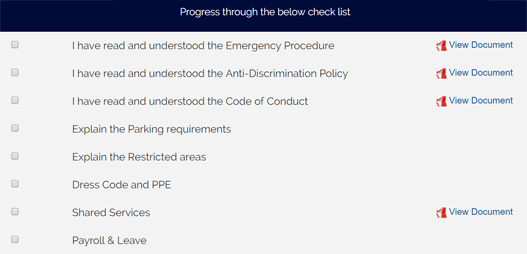
Modern residential contractors use "Digital Inductions" to ensure every worker understands the risks of a specific site.
• Site-Specific Induction: A brief digital walkthrough or PDF covering site access, parking, power/water locations, and emergency muster points.
• SWMS Review: For high-risk work, the subcontractor must submit a Safe Work Method Statement (SWMS) tailored to the specific project.
• Safety Acknowledgment: A digital signature confirming they have read the safety manual and agree to wear required PPE (Hard hats, high-vis, etc.).
3. Project Scope & Technical Briefing
This phase ensures the "Skill vs. Experience" gap is bridged with clear instructions.
• The "Work Order": A document detailing exactly what is included (and excluded) in their price to prevent "scope creep."
• Latest Plans & Specs: Access to the most recent blueprints. Pro-tip: Use software to ensure they aren't looking at an outdated version of the kitchen layout.
• The Schedule: Clear start and end dates, including "dependency" warnings (e.g., "The tiler cannot start until you finish the waterproofing").
4. Software & Communication Setup
If you use project management software (Buildertrend, CoConstruct, etc.), this is where you "plug them in."
• Mobile App Training: Show them how to "Clock-in," upload progress photos, and view the daily schedule from their phone.
• Change Order Protocol: Explicitly explain that no extra work will be paid for unless it is approved via a digital Change Order before the work starts.
• Communication Channel: Define whether you use the software's messaging, email, or a specific phone number for site issues.
5. Payment & Performance Expectations
Clear expectations prevent the "Where is my money?" calls on Friday afternoon.
• Invoicing Schedule: Clarify when invoices must be submitted (e.g., "By Tuesday for Friday payment") and what documentation must be attached (e.g., photos of completed work).
• Cleanliness Standards: Define the "Broom Clean" expectation. Many contractors hold back a small percentage of payment if the site is left messy.
• Quality Check (The Punch List): Explain that the final 10% of a milestone payment is only released once the site supervisor signs off on the quality of work.
When it comes to software essentials, having the right toolkit can make or break project timelines and budgets. For residential contractors, this means choosing platforms that facilitate communication, manage resources efficiently, and provide real-time updates. But it's not just about picking any tool; it's about finding ones that fit seamlessly into your existing processes while enhancing productivity. These tools should be second nature to your team by the end of their onboarding journey.
Lastly, let's not overlook the human aspect of integrating technology within your team’s workflow. While software can automate tasks and provide valuable insights, it’s crucial that every team member feels comfortable using these digital instruments. Investing time in training sessions during the onboarding phase ensures that everyone—from field workers to office staff—can fully leverage these technologies to improve overall efficiency. Remember, an empowered team is a productive one; providing them with both knowledge and tools is essential in navigating today’s competitive landscape in residential contracting.
Residential Contractor Software
Check out our contractor software platform here:


 Online Demo
 We'll also send you a login and details for our iPhone app!